
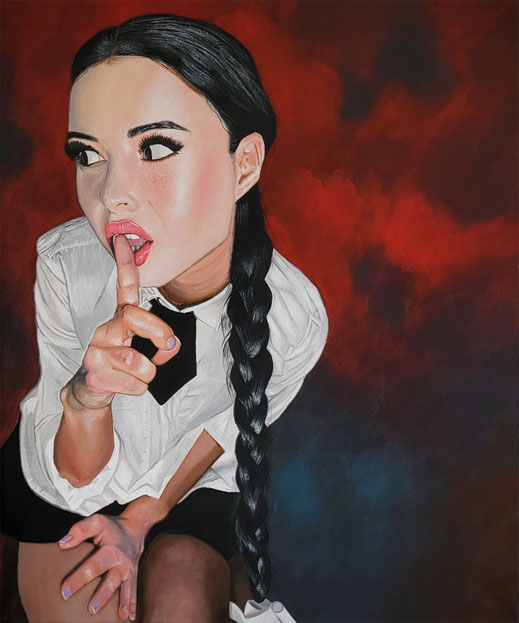
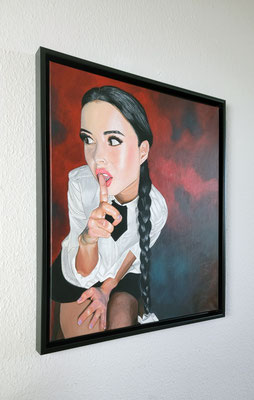


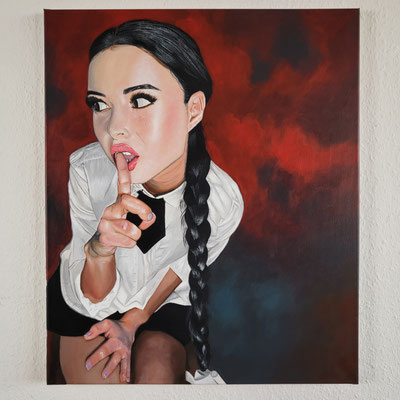
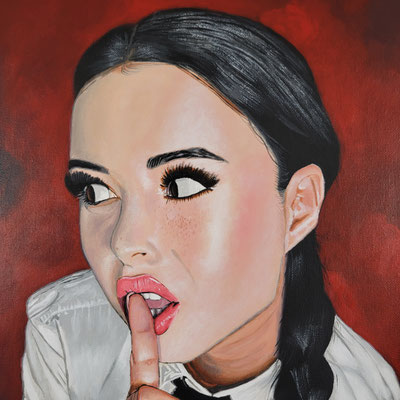
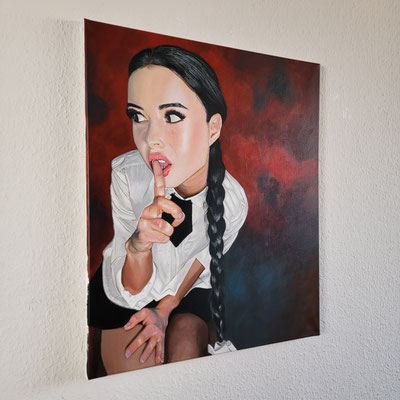
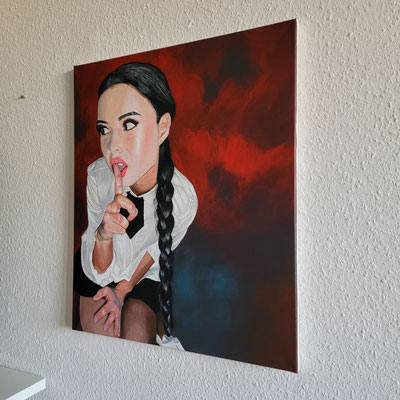

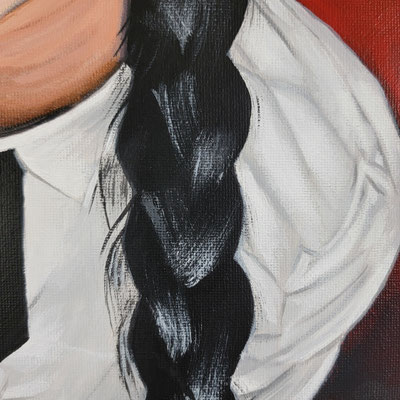

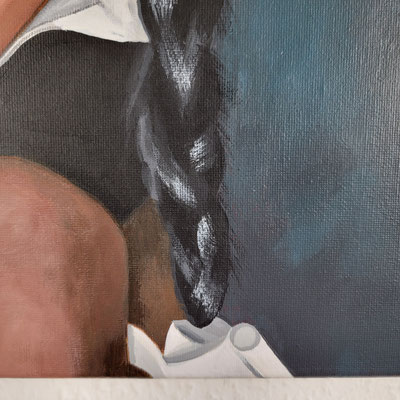
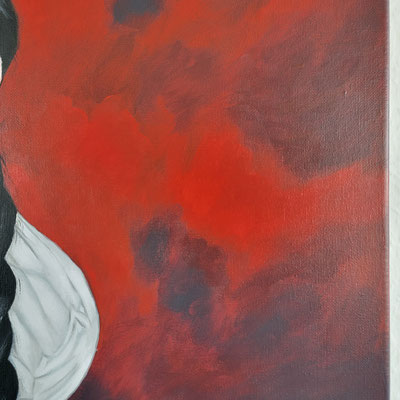


ANIMA
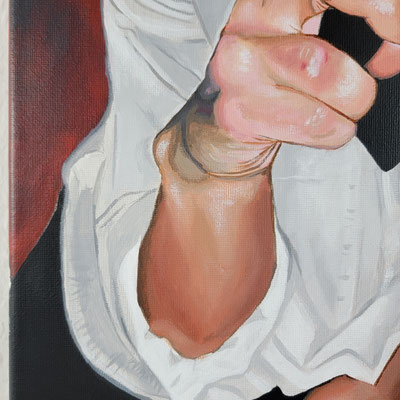
ORIGINAL PAINTING
ACRYLICS ON CANVAS
SIZE: 60 x 50 cm / 24 x 20 inch
YEAR OF ORIGIN: 2025
//
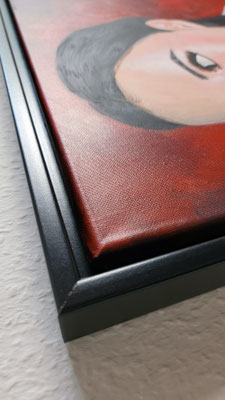
FRAMED
SIGNED
STAMPED
incl. CERTIFICATE OF AUTHENTICITY &
HANGING GEAR
1.250,00 €
incl. VAT, shipping costs apply
- 5 kg
- Available
- 1 - 2 weeks delivery time
DESCRIPTION
Anima and animus are described in analytical psychology and archetypal psychology under the umbrella of transpersonal psychology.[3] Modern Jungian clinical theory under these frameworks considers a syzygy-without-its-partner to be like yin without yang. The goal is to become integrated over time into a well-functioning whole, similar to positive psychology's understanding of a well-tuned personality through something like a Goldilocks principle.
For men, this involves accepting eros, or desire for connection; for women, this means developing logos, or reason and rationality. A therapist's empathetic countertransference can reveal that logos and/or eros need repair through a psychopomp guide to mediate between the unconscious and conscious of the identified patient's Self.
In Jung's theory, the anima makes up the totality of the unconscious feminine psychological qualities that a man possesses, and the animus the masculine ones possessed by a woman. Jung's theory states that the anima and animus are the two primary anthropomorphic archetypes of the unconscious mind, as opposed to the theriomorphic and inferior function of the shadow archetypes. He did not believe they were an aggregate of father or mother, brothers, sisters, aunts, uncles, or teachers, though these aspects of the personal unconscious can influence a person's anima or animus. He believed they are the abstract symbol sets that formulate the archetype of the Self.
Jung believed a male's sensitivity is often lesser or repressed, and therefore considered the anima one of the most significant autonomous complexes. Jung believed that the anima and the animus manifest themselves by appearing in dreams and influence a person's attitudes and interactions with the opposite sex. A natural understanding of another member of the opposite sex is instilled in individuals that stems from constant subjection to members of the opposite sex. This instillment leads to the development of the anima and animus.
Jung said that "the encounter with the shadow is the 'apprentice-piece' in the individual's development ... that with the anima is the 'masterpiece'". Jung viewed the anima process as being one of the sources of creative ability. In his book The Invisible Partners, John A. Sanford said that the key to controlling one's anima/animus is to recognize it when it manifests and exercise our ability to discern the anima/animus from reality.